
1" phenolic
A supplied worksurface option that requires compatibility review against the actual process and cleaning protocol.
Laboratory material selection
The right laboratory surface depends on chemicals, cleaning methods, static-control requirements, impact, heat and the instruments that will live on the bench.
What the workstation has to solve
A supplied worksurface option that requires compatibility review against the actual process and cleaning protocol.
A supplied worksurface option to review as one part of the facility's complete static-control system.
A supplied worksurface option that requires review against the actual process, construction and cleaning protocol.
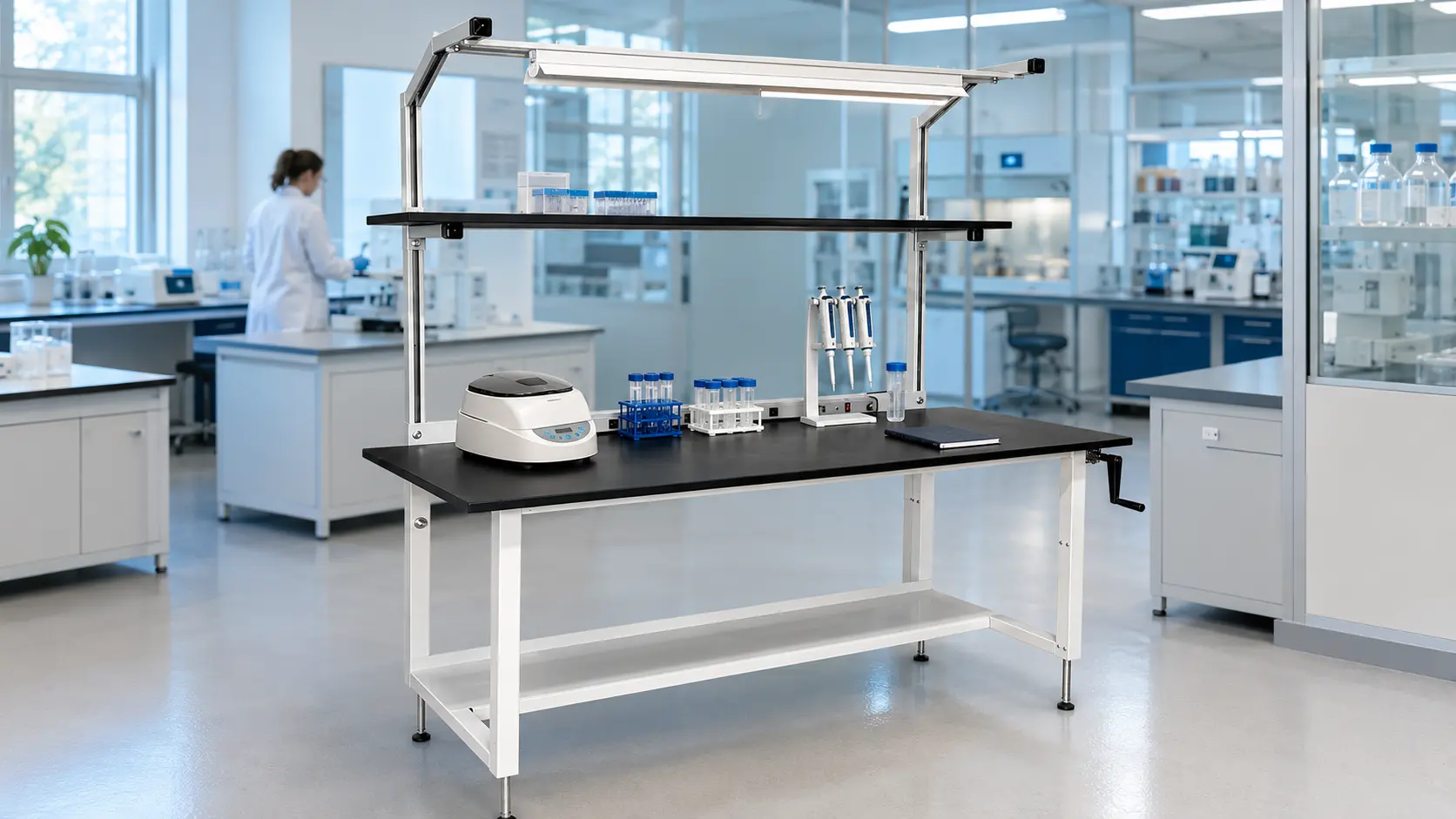
From process to specification
Record the exact exposure, cleaning or control requirement for material review.
Record the exact exposure, cleaning or control requirement for material review.
Record the exact exposure, cleaning or control requirement for material review.
Record the exact exposure, cleaning or control requirement for material review.
Recommended starting points
These STK LABS platforms are planning starting points from the supplied catalog. Final selection should follow the equipment, room, process and approved bill of materials.
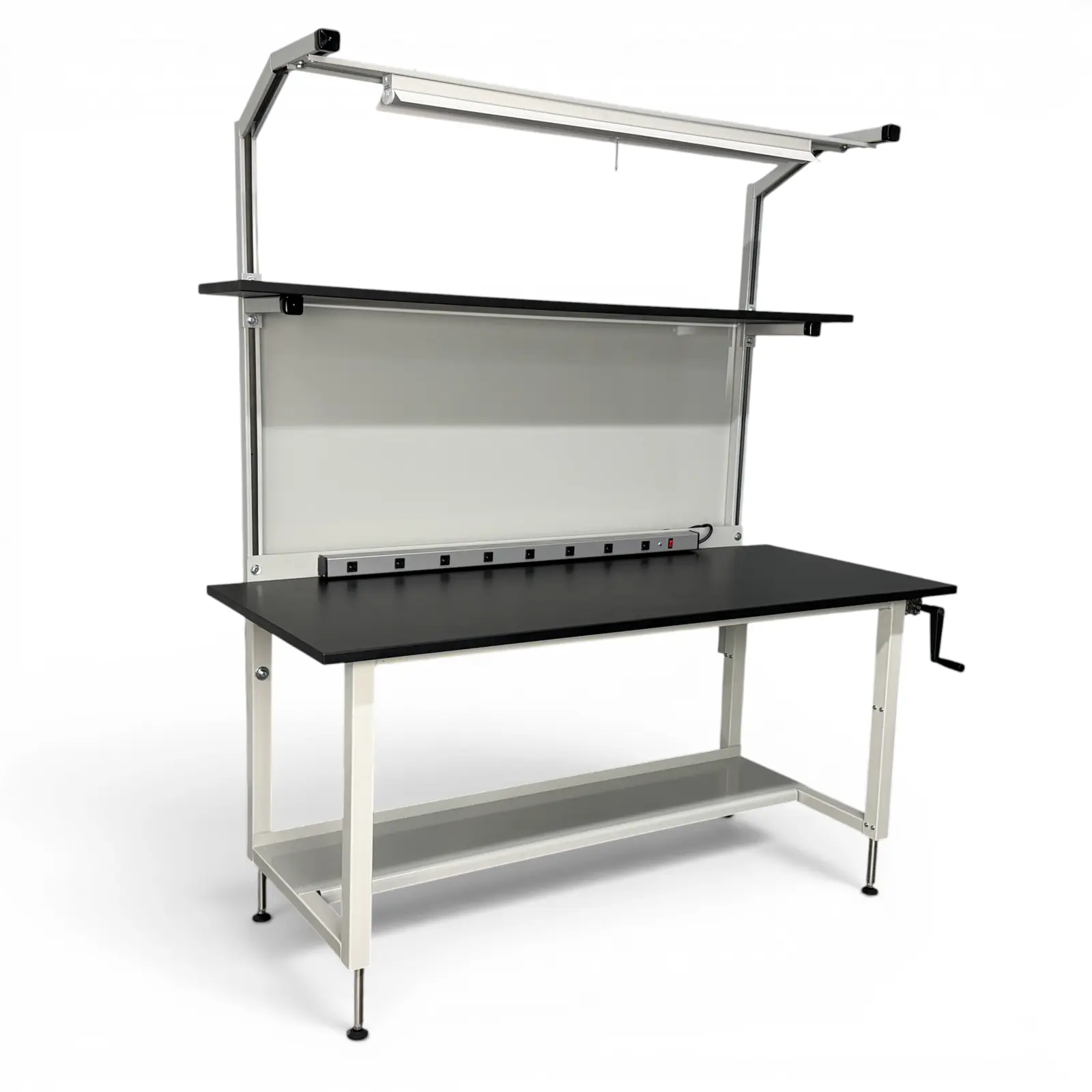
Laboratory Workbench #1 Hydro-Lift · Core Series · 12" hand-crank manual lift · 48–96" widths · 30 or 36" depths.
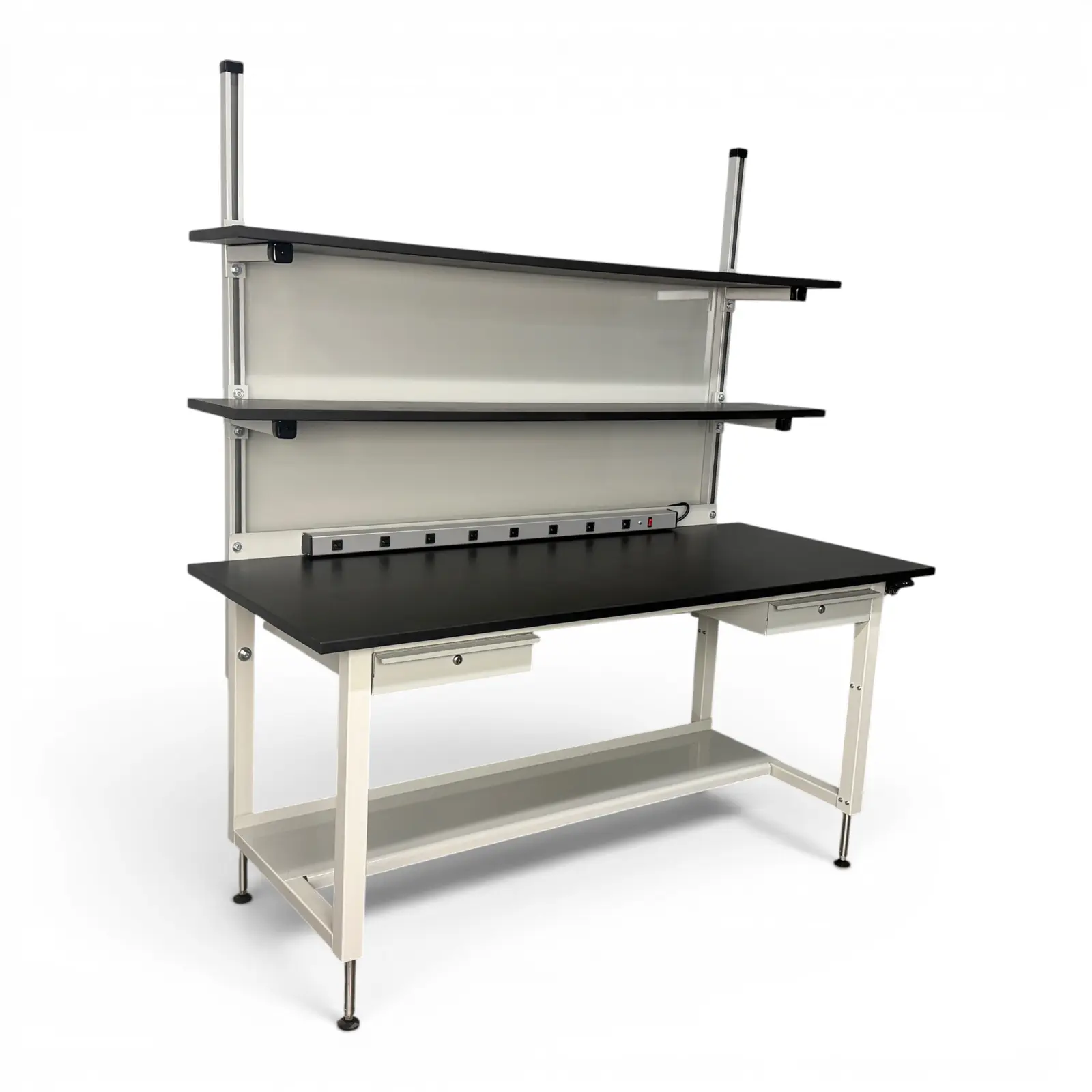
Laboratory Workbench #2 Electric Hydro-Lift · Expanded Storage · 12" electric lift · 48–96" widths · 30 or 36" depths.
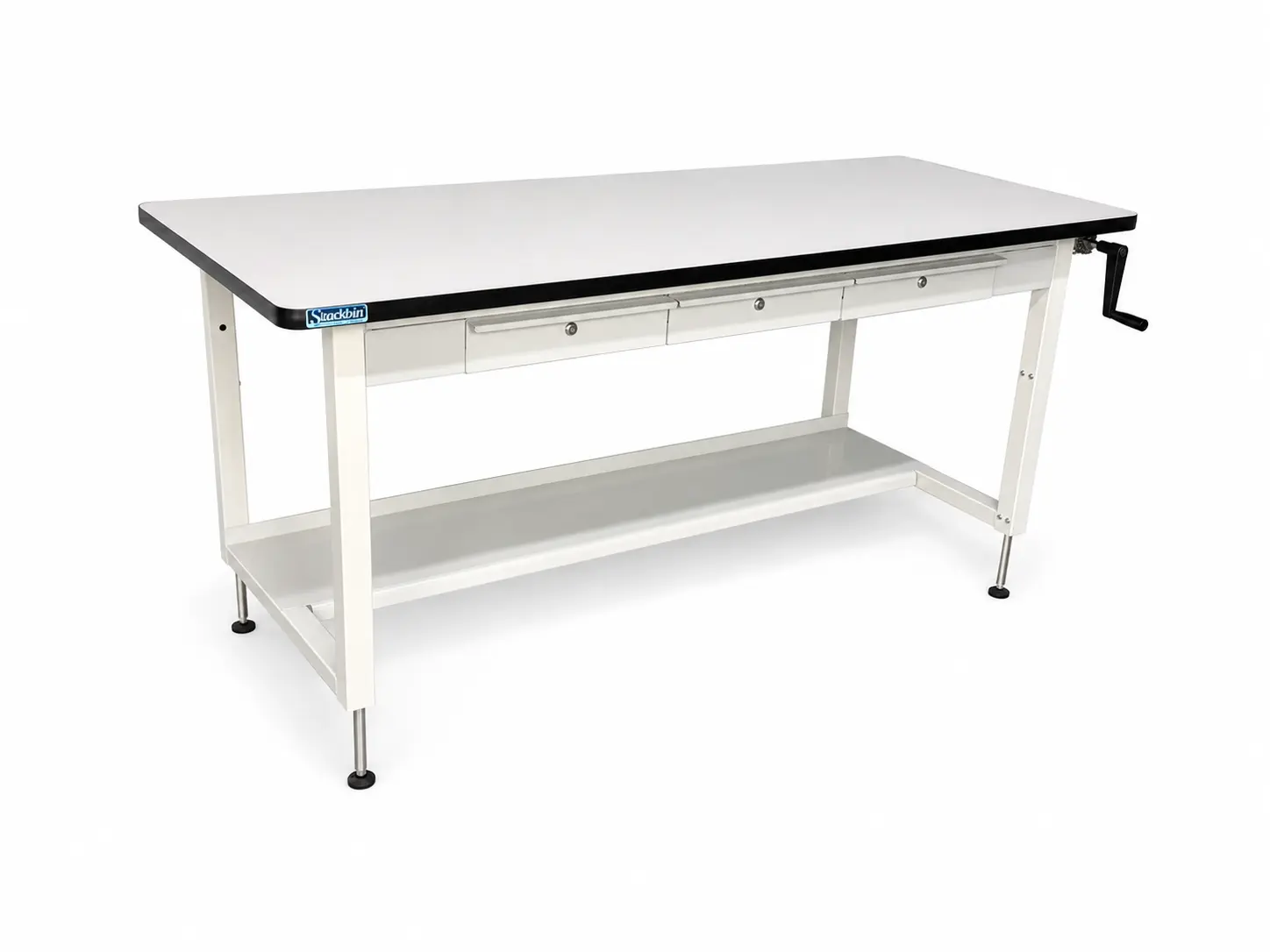
Laboratory Workbench #3 Hydro-Lift · Drawer Storage · 12" hand-crank manual lift · 60–96" widths · 30 or 36" depths.
Material direction
STK LABS can help narrow the material, but the facility should verify compatibility with its chemicals, concentrations, temperature, contact time and cleaning procedures.
Compare surface optionsBefore you request a quote
A useful first conversation starts with the actual process—not a generic furniture list.
Frequently asked questions
There is no universal best surface in the supplied product information. Review the 1" phenolic, 1¾" stainless-skin and 1¼" ESD laminate options against the actual process and facility requirements.
Review the supplied ESD laminate option when the facility has static-control requirements, then approve it as part of the complete ESD control plan.
Yes. The supplied product information lists a 1¾-inch stainless-skin option across all STK LABS models, alongside 1-inch phenolic and 1¼-inch ESD laminate.
Share the chemical and cleaning details during specification. Final material approval should follow your facility's safety and process requirements.
Optional planning tools
Built around your lab